
 By Arthur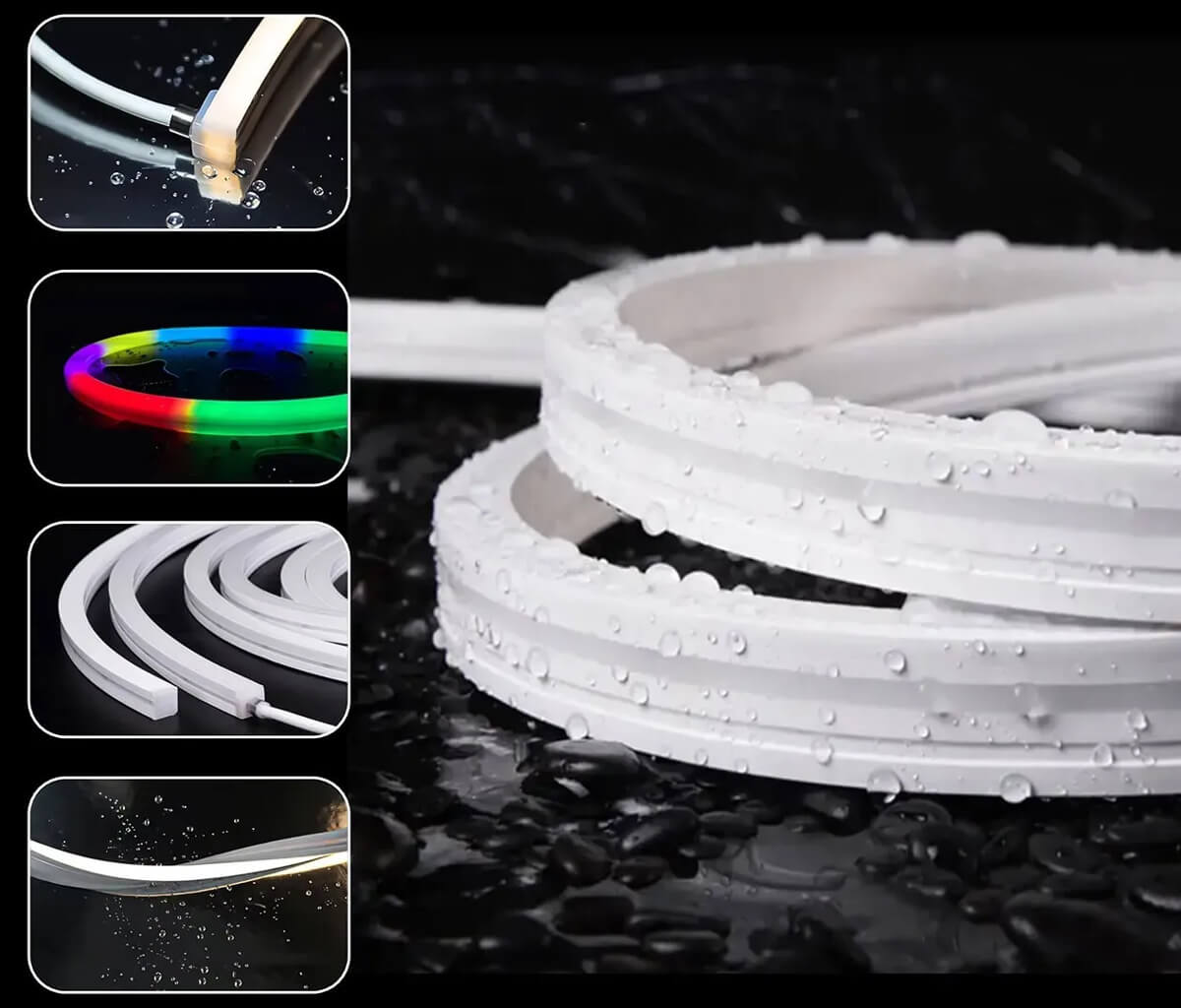
In the world of architectural lighting, the outdoor environment is the ultimate testing ground. From the salt-misted coastlines of tropical resorts to the sub-zero temperatures of northern landscapes, lighting fixtures are subjected to a relentless barrage of UV radiation, moisture, and thermal shock. For engineering contractors and landscape architects, the primary challenge is not just achieving a beautiful glow, but ensuring that the glow persists for years without maintenance.
As the demand for linear outdoor lighting grows, the procurement of LED strip wholesale has shifted from a focus on price to a focus on “Ingress Protection” (IP) ratings and material chemistry. This article explores the critical engineering required to produce professional-grade, weatherproof neon flex that thrives where others fail.
When browsing wholesale LED neon strips, the IP rating is often the first specification checked. However, for extreme environments, understanding the nuances of these ratings is vital.
- IP65 (Water Resistant): Suitable for protected outdoor areas or indoor damp zones. It can withstand low-pressure water jets but should never be submerged or exposed to heavy, driving rain for extended periods.
- IP67 (Waterproof): The industry standard for most architectural facades. IP67-rated neon flex can withstand temporary immersion in water and is fully sealed against dust and sand.
- IP68 (Submersible): Required for swimming pools, fountains, and coastal installations. IP68 products must be manufactured using a “full-encapsulation” process, ensuring no air gaps exist within the tube that could allow for pressure-induced moisture ingress.
For high-end projects, savvy buyers prioritize bulk LED neon flex that has been third-party tested for “Salt Spray Resistance,” which is far more critical for coastal longevity than a simple IP rating.
The “jacket” of the neon flex is its first line of defense. In the LED strip wholesale market, the transition from PVC to Silicone has revolutionized outdoor durability.
UV Stability and Yellowing
PVC (Polyvinyl Chloride) is highly susceptible to ultraviolet degradation. Under intense sunlight, the polymer chains in PVC break down, causing the material to turn yellow, become brittle, and eventually crack. Silicone, on the other hand, is inorganic and inherently UV-stable. It maintains its transparency and flexibility even after a decade of direct sun exposure.
Thermal Expansion and Contraction
In regions with extreme temperature swings—such as deserts where temperatures fluctuate by 40°C between day and night—materials expand and contract. Silicone has a much lower thermal expansion coefficient than PVC, meaning it puts less stress on the internal LED solder joints during temperature cycles. This drastically reduces the failure rate of high-quality neon strip wholesale installations in harsh climates.
90% of outdoor lighting failures occur at the connection points, not within the strip itself. To mitigate this, advanced manufacturing techniques have moved away from manual end-cap gluing.
- Injection-Molded End Caps: Instead of using silicone glue to attach a cap, the factory uses an injection molding machine to fuse a waterproof connector directly onto the neon flex. This creates a molecular bond that is 100% airtight.
- Dual-Extrusion Waterproofing: High-end bulk LED neon flex is often produced via co-extrusion, where the internal LED strip is encased in a solid block of silicone, leaving no “hollow” space for condensation to form—a process known as “Solid Core” construction.
Water and electricity are a dangerous combination, particularly in chlorinated pools or saline coastal air.
Chlorine and Bromine Resistance
Not all silicone is created equal. For underwater use, the neon flex must be “chemical-resistant” to prevent the jacket from clouding over when exposed to pool chemicals. When sourcing LED strip wholesale for aquatic projects, always request a chemical compatibility report.
Salt Spray and Corrosion
In coastal environments, salt particles can corrode the copper traces of an LED strip if even a microscopic amount of air reaches the PCB. Using “Anti-Corrosive” tinned copper PCBs and gold-plated connectors is a hallmark of high-quality neon strip wholesale designed for marine environments.
| Feature | Indoor/Decorative Grade | Extreme Outdoor Grade |
| Material | PVC or Standard Silicone | Food-Grade/Anti-UV Silicone |
| Ingress Protection | IP20 – IP65 | IP67 – IP68 |
| PCB Protection | Bare or Nano-coated | Fully Encapsulated (Solid Core) |
| Connector Type | DIY Solderless Clips | Factory Injection-Molded |
| Operating Temp | -10°C to 40°C | -40°C to 60°C |
Even the best-engineered wholesale LED neon strips will fail if the installation ignores environmental physics.
- Drainage and Airflow: Even IP67 strips should not sit in “standing water” for months. Mounting tracks should include drainage holes to allow rainwater to escape.
- Expansion Loops: In long architectural runs, installers must leave “expansion loops” or slight slack in the cabling to account for the building’s structural movement and material expansion.
- Proper Driver Placement: LED drivers (transformers) are the most heat-sensitive component. Even if they are waterproof, they should be placed in shaded, ventilated enclosures rather than direct sunlight.
For a contractor, the “price per meter” is only one part of the equation. The “Total Cost of Ownership” includes the cost of a bucket truck, a two-man crew, and a lane closure if a facade light fails.
By investing in premium LED strip wholesale products that offer a 5-year outdoor warranty, businesses protect their reputation and their bottom line. A failed 20-meter strip on a skyscraper isn’t just a product loss; it’s a multi-thousand-dollar logistics nightmare.
As urban centers continue to expand their architectural lighting footprints, the demand for resilient, high-performance neon flex will only intensify. Whether it is illuminating the underside of a bridge or the perimeter of a high-altitude rooftop bar, the hardware must be as tough as the environment it inhabits.
For the professional buyer, success lies in vetting suppliers not just on their catalog photos, but on their technical testing data. By focusing on wholesale LED neon strips that utilize silicone extrusion, injection-molded connectors, and solid-core waterproofing, you ensure that your projects remain a beacon of light, regardless of what the weather brings.
Q: Can IP68 neon flex be used in saltwater pools?
A: Yes, but only if specified for saline environments. The silicone jacket must be thick enough to prevent salt ion migration, and the end-caps must be factory-sealed.
Q: Does cold weather affect the brightness of LED neon?
A: Actually, LEDs perform better in the cold as it helps with heat dissipation. However, the jacket material (PVC) may become brittle, which is why silicone bulk LED neon flex is mandatory for freezing climates.
Q: How often should outdoor neon flex be inspected?
A: We recommend a visual inspection every 12 months to check for mounting bracket stability and to ensure that building movement hasn’t strained the power connections.