
 By Siam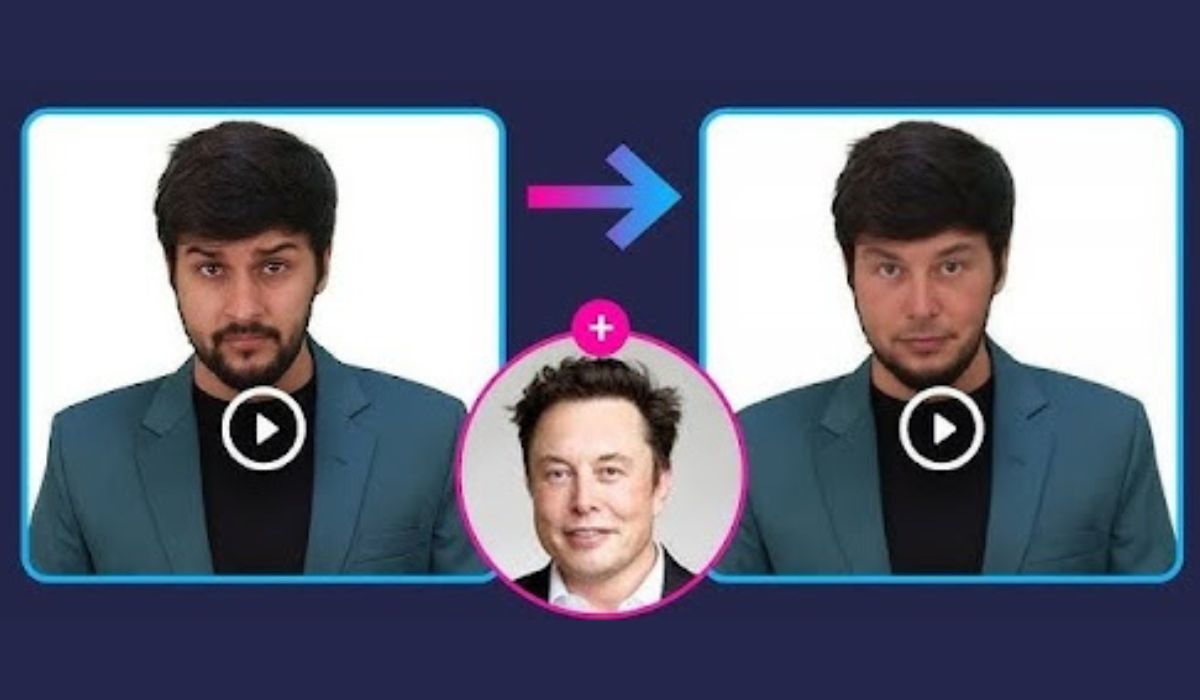
With the rapid digital content environment, video editing technologies have transformed the way creators, marketers, and developers create striking content through AI-powered innovations. Video face swap technology is one of such.
Regardless of the type of product you have to market in a custom way, the development of unique social media content, or even filming your next film, the appropriate face swap tool can save you hours of work and still provide you with the same quality of the final product.
Having tried more than a dozen Apps during the last month, I have made a list of the top video face swap programs of 2026- programs with the advanced AI, usability, and imaginative possibilities. At least one of these tools will work for you whether you are an individual producer or one in a bigger team.
| Tool | Primary Use Case | Modalities | Platforms | Free Plan Available | Notes |
| Magic Hour | Professional face swaps, AI-driven video editing | Video, image | Web, Windows, macOS | Yes | Supports image-to-video AI |
| Reface | Quick swaps for social media | Video, GIF | iOS, Android | Limited | Great for fun content, not for high-res projects |
| DeepFaceLab | High-precision face swaps | Video | Windows | Open-source | Steep learning curve |
| Avatarify | Real-time face swapping | Video, webcam | Windows, macOS | Yes | Real-time streaming support |
| FaceMagic | AI face swaps for mobile | Video | iOS, Android | Yes | Easy social sharing |
| Reflect | Privacy-focused swaps | Image, video | Web | Limited | Emphasizes security and privacy |
| Synthesia | AI avatar and face synthesis | Video | Web | Paid | Best for professional explainer videos |
Magic Hour is now my new favorite professional face swap tool. I would strongly state that Magic Hour video face swap technology is unparalleled in regards to accuracy, versatility and quality of output after the two weeks of testing.
The only distinction between Magic Hour and other solutions is that it can turn still images into realistic video clips based on image to video AI translation, so it is ideal among marketers, content creators, and even aspiring indie filmmakers who want to test digital storytelling.
Pros:
- Highly realistic face swaps with minimal artifacts
- Supports image-to-video AI workflows
- Intuitive interface, ideal for both beginners and pros
- Web-based, no heavy local installation required
- Free plan available for small projects
Cons:
- Premium plan required for high-res exports
- Advanced features can be overwhelming at first
After testing multiple scenarios, from single-frame swaps to multi-scene projects, I found that Magic Hour consistently delivered smooth, natural-looking results. If you’re looking for a platform that delivers both high-quality face swaps and creative AI video editing capabilities, this is hard to beat.
Pricing: Free, Creator: it’s $15/mo for monthly and $10/mo for annual, Pro: $49/month.
Reface has the reputation of face swapping fast and socially media ready. It has a mobile first design, thus making it highly convenient in quick content creation.
Pros:
- Extremely fast face swaps
- Large library of templates and GIFs
- Mobile-friendly
Cons:
- Output quality can be inconsistent for professional use
- Limited control over fine-tuning
Reface is a good choice of anybody seeking to produce viral content or social media videos, although it cannot compete with professional videos.
Pricing: Free with ads; Premium $9.99/month
DeepFaceLab is an open-source powerhouse among creators who prefer to have the entire control over all the details. It enables the optimization of the parameters of neural networks to produce face swaps of high fidelity.
Pros:
- Extremely customizable and precise
- Open-source, free to use
- Community support with tutorials
Cons:
- Steep learning curve
- Requires significant computational resources
Given the technical know-how and hardware, DeepFaceLab is capable of enterprise-level output.
Pricing: Free
Avatarify is concentrated on real-time face swaps which are best suited during streaming and live presentations.
Pros:
- Real-time face swapping
- Works with Zoom, Teams, and other video calls
- Easy to set up
Cons:
- Output quality lower than pre-rendered swaps
- Limited post-production features
This is an ideal tool to use in a live session and interactive content but less so in refined video creation.
Pricing: Free
FaceMagic is aimed at creators that are mobile-first. Its Artificial Intelligence engine is quick and produces sharable video content within minutes.
Pros:
- User-friendly mobile app
- Quick swaps for social sharing
- Frequent template updates
Cons:
- Lacks advanced customization
- Watermarks in free version
Fit best with the creators who value speed over movie quality.
Pricing: Free; Premium $4.99/month
Reflect follows a privacy-first philosophy, meaning that the images of the users are not kept or abused. This becomes more essential in the AI video room.
Pros:
- Strong privacy measures
- Easy to use
- Supports both images and video
Cons:
- Limited editing features
- Less flexibility for creative output
Ideal among designers working with sensitive material or trying out AI substitutes in the workplace.
Pricing: Free limited plan; Paid plans available
Synthesia is the best fit with professional content producers and companies. It has an AI avatar and face synthesis technology where you can create explainer videos without the actors.
Pros:
- High-quality AI avatars
- Suitable for marketing and educational content
- Cloud-based, easy collaboration
Cons:
- Expensive for casual users
- Limited to scripted scenarios
Synthesia is a competitive option in case your main aim is AI avatars splendidly promoted marketing videos.
Pricing: Starting at $30/month
To evaluate each tool, I have tried it for more than 2 weeks by testing it with a mix of measures: realism, easiness of use, speed of rendering, and flexibility. I had some experience in casual social media lives, and professional video work. The emphasis was on the platforms that can accommodate the current AI-based workflows such as image-to-video AI, high-resolution content, and cross-platform compatibility.
Rapid innovation is being witnessed in the video face swap market in 2026:
- Artificial intelligent avatars are emerging as the new norm of content marketing.
- Image-to-video AI is setting the boundary of fixed graphics to moving video content.
- Privacy-conscious applications such as Reflect are becoming more popular as the issue of data security increases.
- Live streaming and interactive content which are provided via real-time swapping is a new niche.
It is apparent that hybrids, that is, those that incorporate face swap and the wider range of AI-based video editing features, will become the norm of digital content creation in the next generation.
To professional creators and marketers, Magic Hour will be the definite winner in 2026. It is not limited to a single application since it has precise face swaps, image-to-video AI features, and is user-friendly.
In case you want to be fast and go viral on social media, applications such as Reface or FaceMagic are the best to use. DeepFaceLab is the best bet to the technical experts who want to achieve ultra-realistic outputs. And on live interaction, Avatarify is the best in a real-time experience. Get ready to experiment, try various tools and choose the one, which fits your working process and final results.
Q1: Can I use Magic Hour for free?
Yes, Magic Hour has a free plan, which has limited resolution and exports, and which is ideal to test workflows.
Q2: What is image-to-video AI?
It is a technology that transforms the still photos into moving video images so that they look like they move in a real-life manner with one photo.
Q3: Do these tools support the use of personal images?
The majority of trustworthy applications, such as Magic Hour and Reflect, keep their data safe and confidential, yet review the policies.
Q4: What is the most suitable tool for social media content?
FaceMagic and Reface are targeted towards fast and viral clips.
Q5: Do these tools require expensive hardware?
Magic Hour is a web-based tool that needs little local resources, whereas DeepFaceLab has an advantage of an effective GPU.
YOU MAY ALSO LIKE: Video&AI: The Ultimate Guide to the Research & Applications
 Arthur