 By Bemi Brooks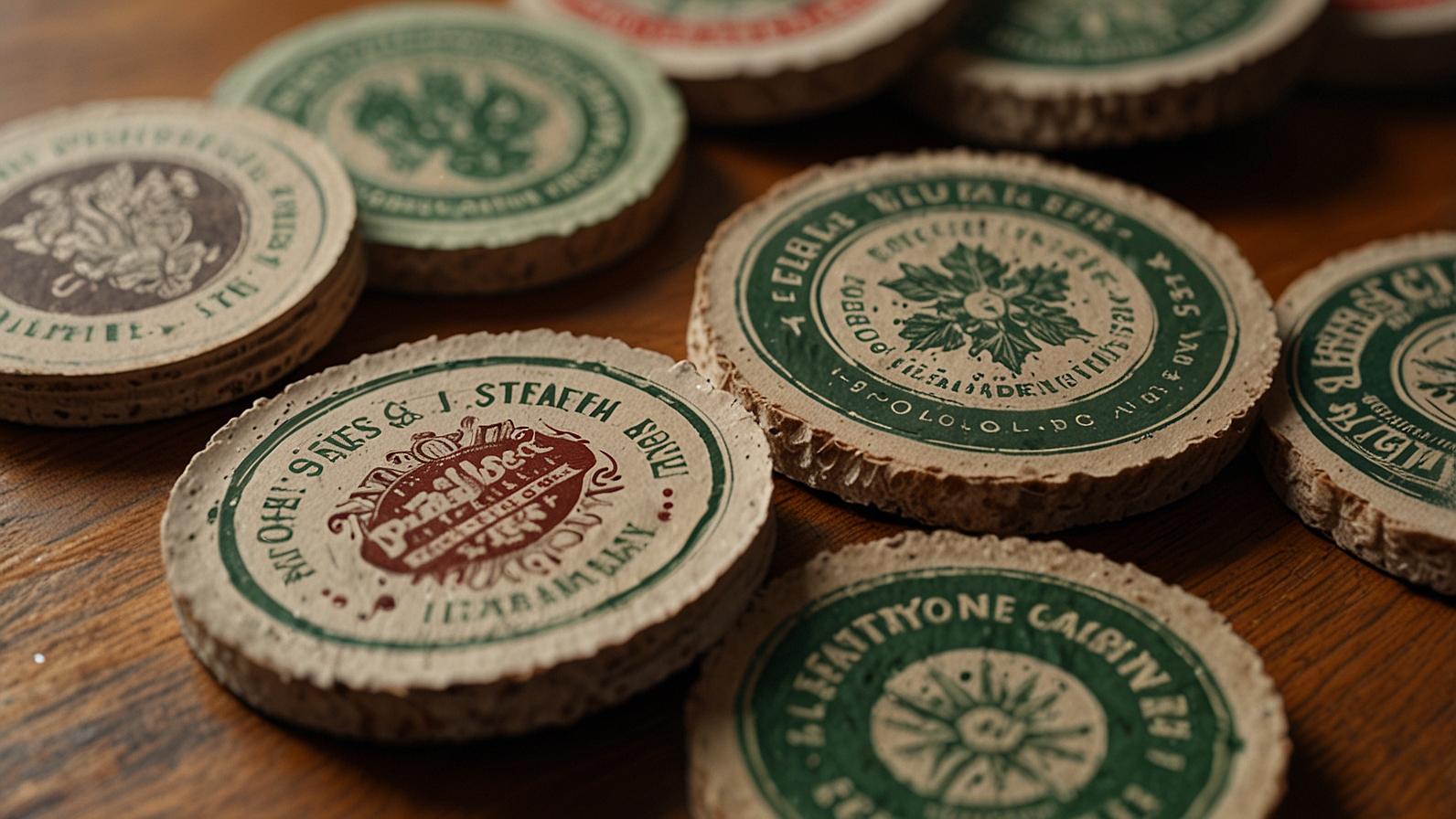
Have you ever absentmindedly peeled the corner of a cardboard beer coaster while deep in conversation? That little square under your pint has a name, a rich history, and is now quietly leading a packaging revolution. Meet the pappedeckel (pronounced pap-peh-deckel). This German compound word—literally “cardboard lid”—is the unsung hero of our tabletops, from guarding against ring stains to sealing our to-go cups. But today, its role is expanding far beyond the beer hall, evolving into a powerful, planet-friendly alternative to single-use plastic. Let’s explore back the layers of this seemingly simple object.
Think of the pappedeckel as the ultimate utility player. Its traditional role is pure, simple pragmatism.
- The Original Protector: In German taverns for over a century, its primary job was to protect wooden tables from condensation and spills. It was cheap, absorbent, and could be branded with a brewery’s logo—an early example of functional marketing.
- A Multitasking Marvel: Beyond coasters, these flat cardboard discs were used as simple lids for jars, separators in boxes, and protective layers between stacked dishes. Their versatility stemmed from one thing: accessible, moldable pulp material.
This history of practicality set the perfect stage for its modern reinvention. When the world woke up to the plastic waste crisis, innovators looked at this old-school solution and saw a brilliant, circular future.
Today, the term pappedeckel describes a critical component in sustainable packaging design. It’s no longer just passive protection; it’s an active, functional lid. Here’s why it matters now more than ever:
- The Plastic Problem: Single-use plastic lids are a nightmare for recycling systems. They’re often made from different plastics than the cups they seal, contaminating streams. Many are simply littered, taking centuries to break down.
- The Circular Solution: A modern pappedeckel is typically made from a single material—recycled paperboard or molded fiber. This makes it either:
- Easily Recyclable (with paper waste)
- Compostable (breaking down into organic matter in industrial facilities)
- Functional by Design: Advances in material science mean these lids can now be grease-resistant for food containers, have secure fitments for cups, and even hold up under heat for a certain period.
Pappedeckel vs. Traditional Plastic Lid
| Feature | Modern Pappedeckel | Traditional Plastic Lid |
|---|---|---|
| Primary Material | Recycled Paperboard/Molded Fiber | Polypropylene (PP) or Polystyrene (PS) |
| End-of-Life | Recyclable/Compostable | Often downcycled or landfilled |
| Carbon Footprint | Generally Lower | Generally Higher (fossil-fuel based) |
| Consumer Perception | Eco-friendly, natural | Wasteful, problematic |
| Branding Canvas | Excellent for premium print | Limited, often embossed |
This isn’t just theory. Major companies are deploying this technology to meet sustainability goals and consumer demand.
- Liebeck (Germany): A leader in molded fiber packaging, they produce high-performance pappedeckel solutions for the food service industry that are both home-compostable and fully functional.
- Heineken & The “Green Bar” Initiative: Many breweries are going back to the roots, using thicker, durable cardboard coasters (the original pappedeckel) and ditching plastic promo materials altogether.
- Specialty Coffee Shops: Independents and chains are increasingly opting for paperboard lids on their cold brew and iced drinks, prominently displaying their compostable status as a brand value.
- Food Delivery: Companies are testing molded fiber lids for soup and salad bowls, creating a fully compostable meal delivery system where both the bowl and lid go in the green bin.
Think of it as a quiet revolution. Every time you get a takeaway cup with a flat cardboard lid instead of a plastic dome, you’re holding a piece of this pragmatic, sustainable shift.
Let’s be honest. When you hear “cardboard lid,” you might think of soggy, failing messes. That’s the old story. Today’s versions are engineered for performance.
- Myth: “It will get soggy and fall apart.”
Reality: Modern coatings (often bio-based) and precise molding create barriers that resist moisture for the typical lifespan of a drink or meal. They’re designed to last as long as you need them to, not longer. - Myth: “They can’t be as secure as plastic.”
Reality: Advanced die-cutting and friction-fit designs ensure a snug, secure fit on standard cup and container sizes. No one wants a wobbly lid! - Myth: “Compostable just means it breaks down in a landfill.”
Reality: This is a crucial distinction. True compostable pappedeckel products are certified (e.g., BPI, OK Compost) to break down in industrial composting facilities within a specific timeframe. Always check for certification.
The trajectory is clear. As regulations on single-use plastics tighten and consumer preference solidifies, the humble pappedeckel will become ubiquitous. We can expect:
- Smart Integration: QR codes printed directly on the lid for recycling instructions, loyalty programs, or storytelling about the brand’s sustainability journey.
- Performance Enhancements: Even better heat and grease resistance, broadening applications to hotter foods and oilier products.
- Regulatory Tailwinds: With EU directives and similar laws globally targeting plastic waste, the economic and regulatory advantage will tilt decisively toward simple, mono-material solutions like these.
This isn’t just a trend for big brands. Awareness is the first step.
- Look Down: Notice what’s under your drink or on top of your container. Is it a plastic dome or a flat pappedeckel?
- Vote with Your Wallet: Support businesses that use sustainable packaging. A quick compliment to a manager can go a long way.
- Dispose Correctly: If it’s certified compostable and you have access to a green bin, compost it. If it’s plain paperboard, recycle it with paper. Contamination is the enemy of both systems.
- Think Broader: At home or in the office, consider cardboard coasters and separators. It’s the original, reusable spirit of the pappedeckel.
From a tavern in Munich to a high-tech composting facility, the journey of the pappedeckel is a masterclass in how smart, simple design can evolve to meet the challenges of our time. It proves that sometimes, the most effective solutions aren’t flashy new inventions, but the thoughtful reinvention of what’s already been working quietly for generations.
What’s your experience with sustainable packaging? Have you spotted a great compostable lid recently? Share your finds and thoughts below!
You May Also Like: SeventhWay – Find Premium Jobs Now: A Strategist’s Honest Guide
How do you pronounce “pappedeckel”?
It’s pronounced “pap-peh-deckel.” Think of “pap” as in paper, “peh” as in pepper, and “deckel” rhyming with “heckle.”
Can I put a compostable pappedeckel in my home compost pile?
It depends on the certification. Some are designed for industrial composting only (higher temperatures). Check for “home compostable” certification (like the OK Compost HOME logo) to be sure it will break down in your backyard bin.
Are paperboard lids more expensive than plastic?
Currently, they can be slightly more costly due to scaling and material prices. However, as demand increases and production scales, the cost is dropping. Many brands absorb the cost as an investment in sustainability and brand image.
Do cardboard lids affect the taste of my drink or food?
High-quality, food-grade molded fiber and paperboard are inert and designed not to impart any taste or odor. You should experience no difference.
Why not just go lidless?
Lids serve important functions: preventing spills, maintaining temperature, and ensuring hygiene (especially for takeaway). The goal is to provide these benefits without the environmental cost.
Is all molded fiber packaging a type of pappedeckel?
In the broad, modern sense of a “cardboard lid,” yes. The term has expanded from its strict coaster meaning to encompass these functional, molded fiber lids used in packaging.
Where can I buy these for my own business or event?
Many packaging suppliers now carry lines of compostable paperboard and molded fiber lids. Search for “compostable food container lids” or “molded fiber drink lids” to find manufacturers and distributors.
 Siam
Siam