
 By Arthur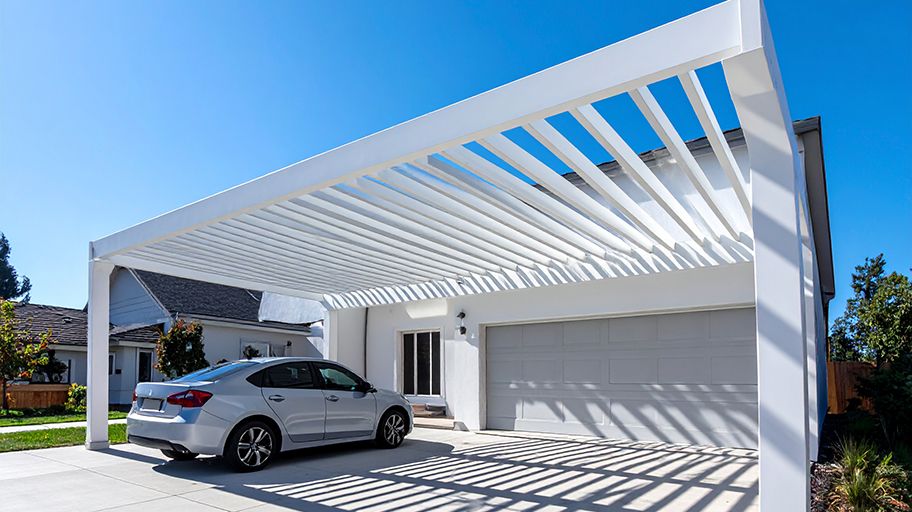
Choosing a new carport involves more than just picking a style you like. One of the most crucial decisions you’ll make is selecting the right size. A carport that’s too small won’t protect your vehicle properly, while one that’s too large might overwhelm your property or violate local building codes.
The first question to answer is how many vehicles you need to cover. This will determine whether a single or double carport is the right choice for you.
A single carport is designed to shelter one standard-sized car, truck, or SUV. The most common dimensions are:
- Width: 12 feet
- Length: 20 to 24 feet
- Height: 7 to 9 feet
A 12-foot width provides enough room to open your car doors without hitting the support posts, while a 20-foot length accommodates most standard cars. If you own a longer vehicle, like a full-size truck or a large SUV, opting for a 24-foot length is a wise decision. The height, or leg height, determines the clearance. A 7-foot height is usually sufficient, but if you have a taller vehicle or plan to install a car lift, you’ll need to go higher.
A double carport, designed for two vehicles, naturally requires more space. Standard sizes typically start at:
- Width: 20 to 24 feet
- Length: 20 to 24 feet
- Height: 7 to 9 feet
A 20-foot width is the minimum for a two-car carport, but it can feel a bit tight once both vehicles are parked inside. If you have the space, a 24-foot width offers much more comfort, allowing you to open all doors freely and maneuver without stress. Just like with single carports, the length should be based on your longest vehicle. A double carport is also an excellent option if you need extra covered space for things like a small boat, a lawnmower, or a workshop area.
Before you commit to a carport, you need to take some precise measurements. This step prevents the costly mistake of ordering a structure that doesn’t fit your vehicle or your intended location.
Grab a tape measure and record the width, length, and height of each vehicle you plan to park under the carport.
- Width: Measure from the widest points, which are typically the side mirrors.
- Length: Measure from the front bumper to the rear bumper.
- Height: Measure from the ground to the highest point of your vehicle, including any roof racks or antennas.
Once you have these numbers, add a buffer to ensure ample space. A good rule of thumb is to add at least 2-3 feet to the width on each side and 3-4 feet to the length. For height, add at least one foot of clearance.
Next, measure the space where you plan to install the carport. You’ll need to know the available width and length. It’s essential that this area is flat and level to ensure the carport is stable and structurally sound.
While measuring, look for any potential obstructions. Are there trees, power lines, fences, or parts of your house that could interfere with the structure? Make sure to account for these obstacles. Your carport needs to fit comfortably in the designated area without crowding other elements of your property. For example, some homeowners prefer sturdy structures, like those metal carports in Huntsville, that require a solid, unobstructed foundation.
Don’t overlook the administrative side of installing a carport. Many local municipalities have specific building codes and permit requirements that dictate the maximum size, height, and placement of structures like carports.
- Check with Your HOA: If you live in a community with a Homeowners’ Association (HOA), start there. They often have strict rules about the size, style, and color of any exterior additions.
- Contact Your Local Building Department: Your city or county’s building department can provide information on setback requirements (how far the structure must be from property lines), height restrictions, and whether you need a permit. Ignoring these regulations can lead to fines or being forced to remove the structure.
Getting this information early in the process saves you from potential headaches and ensures your project goes smoothly from start to finish.
A carport can be more than just a place to park your car. With a little planning, you can turn it into a multi-functional space.
- Add Storage: Consider a carport with enclosed sides or integrated storage units. This is a great way to store tools, gardening supplies, or seasonal items securely.
- Create a Workshop: A longer or wider carport can easily double as a workshop. You’ll have a covered, protected area to work on projects, rain or shine.
- Choose a Taller Height: Opting for a slightly taller carport can make the space feel larger and more open. It also provides clearance for larger vehicles like RVs or boats, increasing the structure’s versatility.
- Install Lighting and Outlets: Adding electrical elements can transform your carport into a functional space you can use day or night for hobbies or maintenance tasks.
Choosing the right carport dimensions is a balancing act between the size of your vehicles, the available space on your property, and local regulations. By taking careful measurements and planning ahead, you can select a carport that not only protects your vehicles but also enhances your property’s value and functionality.
YOU MAY ALSO LIKE: Choosing the Best Car for Your Dubai Sightseeing Tour